
I grew up in India, a country that celebrates "Unity In Diversity". It was in our school morning prayers, our civics textbooks, our Republic Day parades, and also in those Doordarshan montages (before the TV cable era). I have been listening and learning since the beginning that India is a beautiful mosaic where different cultures not just co-exist in harmony, but also blend.
And I believed it too. I truly did. For years, I solo-travelled to different parts of the country, met people of different cultures, celebrated with them, attended weddings, and worked in different parts. And this deserves a special highlight- tasted their food, loved it, and most times, learned to cook it too. All this was a dream come true, and living my learnings to the fullest. Right up until the moment I got married in a different culture and realised that "Unity in diversity" sounds great outside, but it feels like a threat when it is happening in your own house.
Most (or Everything) Is A Culture War!
I am a Hindu married to a Sikh family. If you are a beginner like me, here is a thing you need to know- a Punjabi household is less of a "home" and more of a high-energy theatre production with its own vocabulary, decibel levels, and a very specific set of culinary laws.
Now my job here was to unlearn the "Hinduism" in me and quickly learn and adopt the new "Sikhism" cultural ways. For example, I once, not so accidentally, made a dish from the South Indian cuisine spread. The reaction wasn't just a critique of my cooking; it became a geopolitical event.
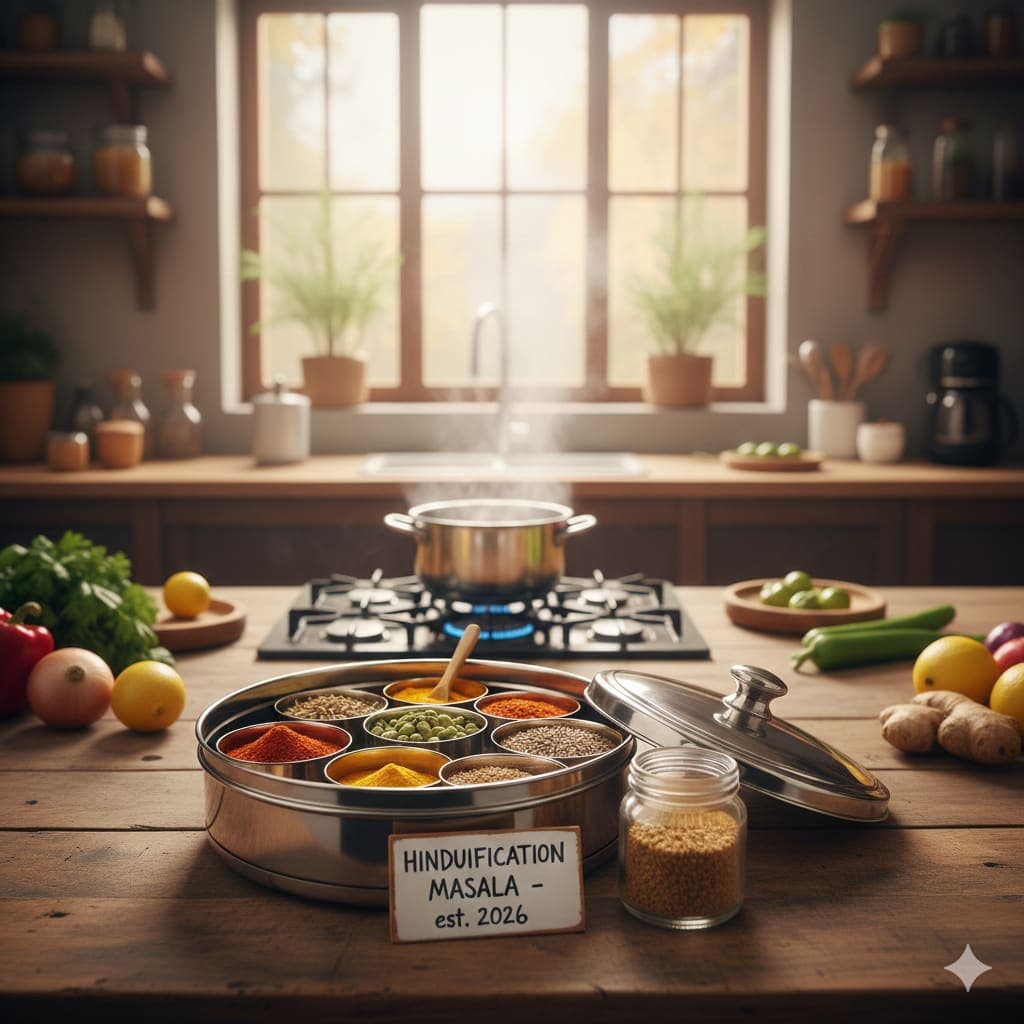
I was jokingly (but also... not jokingly) accused of the "Hindufication of meals." Apparently, my choice of dish wasn't just a matter of flavour preference; it was a threat to the ancestral sanctity of tadka and heavy Punjabi meals. It’s funny. We can celebrate different cultures across state lines, but the moment a new habit breathes the same air in the same room, it stops being "diversity" and starts feeling like an invasion. When you’re sharing a roof, a different way of chopping onions isn't just a "variation"- it’s a challenge to the status quo.
A Group Having Its Own Identity
Then there’s the "Identity Audit." Every household has an unwritten manual on the Right Way to Exist. There is a way to dress, a way to speak, and a way to "be" that signals you belong to the tribe.
If you deviate? You’re not just being yourself; you’re "difficult." Adhering to the group criteria becomes the price of admission. It’s a strange paradox: we pride ourselves on being a diverse nation, yet our smallest units, our families, often demand the strictest or most rigid conformity. We want the world to be a rainbow, but we want our living rooms to be a very specific shade of beige.
The Question We Stopped Asking!
We’ve stopped asking the right questions because we’re too busy defending our perimeters. We hesitate. We have doubts. We don't ask, "Why does this change scare me?" or "Why do I feel like your presence erases mine?" Instead, we just lean into the friction.
We’ve made the "other" feel like an outsider in their own home, or worse, made them feel oppressed by the weight of having to "fit in."
This makes me think that maybe we’ve fundamentally misunderstood the concept. Perhaps "Unity in Diversity" isn't a finished state we’ve already achieved, but a skill we’ve forgotten to practice.
So, where does that leave me?
If you ask me who I am culturally today, I’ll give you a blank stare. I’m a bit of every state and city I have visited. I am culturally, all those meals that I have shared with people of different cultures. I am my past, and a bit of this new country I have moved to. And I am also someone who carries a lot of resistance every time I’m told there’s only one "right" way to do things.
I am not a fixed point on a map. I am a constantly re-discovering self.
I’ve realised that real confidence isn't about clinging to a specific ritual or a food option. Real confidence is found in our shared humanity, the part of us that knows better than our egos do. That humanity is the only thing that can actually bridge the gap between "me" and "them."
Maybe the whole crux of "Unity in Diversity" isn't about blending perfectly until we’re all the same. Maybe it’s about the courage to be different in the same house, to ask the hard questions, and to realise that my culture isn't under threat just because you brought a different flavour to the table.
After all, a different cuisine never really killed anyone.