
The blog is the third in the series of Why I Refuse to Westernise My Indian Home in Canada.
There's a particular aisle in every Canadian grocery store that I find equal parts fascinating and overwhelming- it's the supplement aisle.
Rows and rows of amber bottles. Iron. Calcium. Fibre shots. Probiotic capsules. Turmeric tablets. Vitamin D gummies. There's something for everyone, even for kids, but everything comes at a premium price. The first time I stood in front of this aisle was a year ago. When I was "advised" by everyone (except doctors) that I would "need" these supplements to survive here. I remember thinking then, haven't I been eating all this already, just in the form of food and not pills!?
I'm not here to dismiss the science of supplementation. For many people, supplements are medically necessary and genuinely life-changing. But for the average person who is broadly healthy and simply looking to take better care of their body, I want to make a quiet, confident case for the Indian kitchen.
Canada Grocery Stores Have Turmeric Shots and Turmeric Tablets!
Tell this to my Indian parents or grandparents, and they will judge you just by their look!
Turmeric in a pre-packaged form, marketed as an immunity booster, makes me smile every time as an Indian. I completely understand the appeal, though, especially after COVID. Turmeric has been studied extensively for its potential anti-inflammatory, anticancer, antidiabetic, antimicrobial, antiviral, and antioxidant properties. The science is real. The interest is valid.
But here's the thing: the active ingredient in turmeric, curcumin, has both antioxidant and anti-inflammatory properties. Anyone trying to manage inflammation could also benefit by adding it to their food.
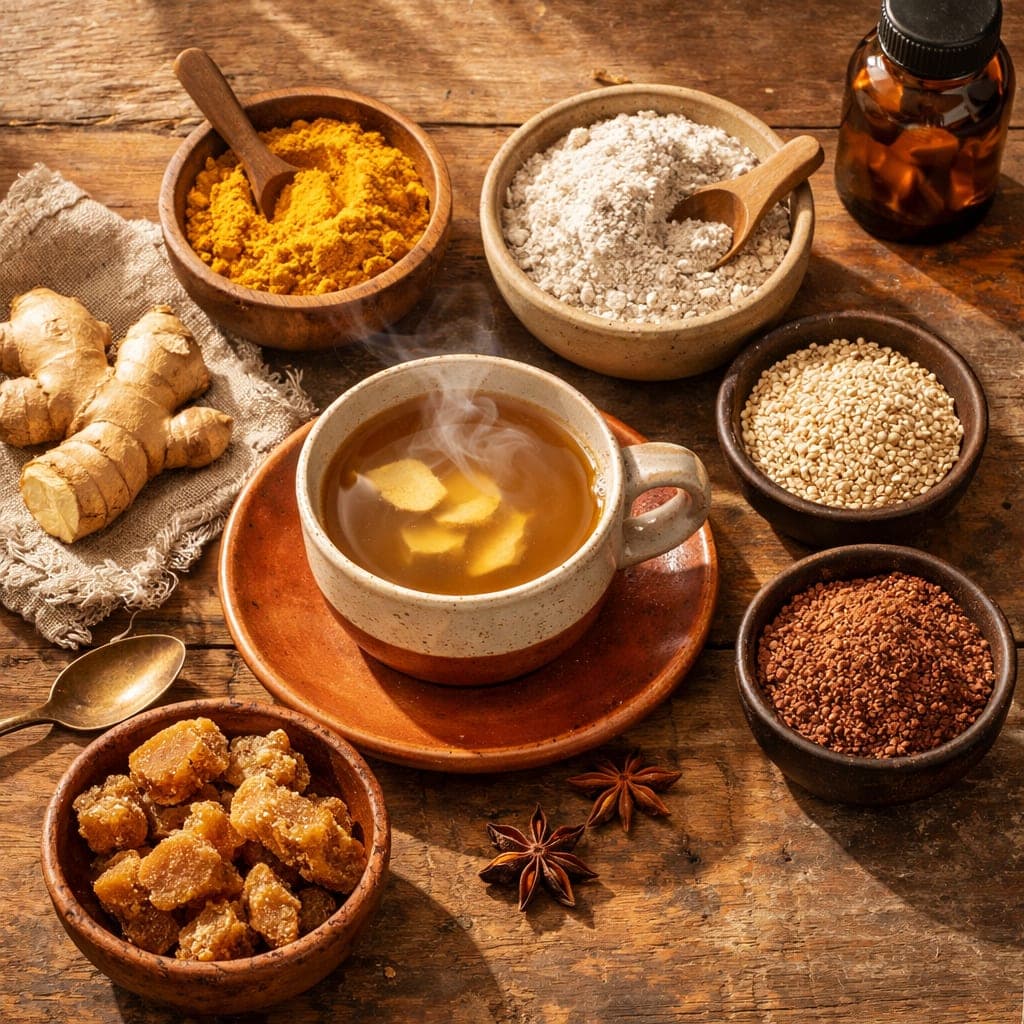
Indian food already does it, not thinking about it as a supplement, but as a reflex. It goes into the dal. Into the dry vegetable preparation. Into the milk at night when someone has a sore throat. Into the rice, the curry base, and the marinated chicken. A pinch here, a pinch there. Combining turmeric with black pepper, which contains piperine, has been shown to increase the absorption of curcumin by as much as 2000%. Whole food form over pills has always been the preference!
The irony is not lost on me: an ancient Indian spice now sits in a glass dropper bottle sold for $21 at a wellness store, when a bag of turmeric powder costs four dollars and lasts six months.
Indian Iron Supplements Grow In The Field
Iron deficiency is real, and iron supplements do their job. But if you've grown up in an Indian household, you've likely been getting your iron from a source far gentler on your gut than a tablet.
Finger millet, ragi, is one of the most powerful grains in the Indian pantry. Of all the cereals and millets, finger millet has the highest amount of calcium (344mg per 100g) and potassium (408mg per 100g), and it has higher dietary fibre, minerals, and sulphur-containing amino acids. One serving, 20g of Finger Millet, provides roughly 1.2 mg of iron. When sprouted, its iron content and vitamin C levels both go up, which helps your body absorb that iron even more effectively.
Ragi ladoos. Ragi dosa (pancake). Ragi porridge for babies. These weren't just comfort foods; they were engineered for nourishment, passed down through generations who didn't have a supplement aisle but knew exactly what their bodies needed.
And the calcium piece? Sesame seeds, til, those tiny things we toss into our laddoos and chikkis, are one of nature's most concentrated sources of calcium. Westerners, you might have spotted it on your burger buns, too. Sesame seeds are a rich source of protein, healthy fats, and minerals like calcium, magnesium, and iron, while jaggery retains many minerals and vitamins, including vitamin B and antioxidants. A calcium supplement tablet, by contrast, often comes with a long warning list and directions to take it with food, because calcium from food is simply better absorbed.
The Ladoos That Saved Me From Canadian Winters!
I won't say it saved me from the winter depression. But it helped me stay warm while I was fighting it.
Roasted Ragi flour, sesame seeds, crushed peanuts, and jaggery- mixed and stored in the form of small serving balls- here is your recipe to fight Canadian winters! In India, these sweet balls are made during all our winter festivals- Lohri, Makar Sankranti, and Pongal. Introduced to us as a "must-have" festival delicacy. Eventually, it made us realise that it has been making our winters easy and bones strong to fight those winter chills.
Sesame seeds contain zinc and antioxidants, while jaggery supports detoxification and gut health- together functioning as a natural immunity booster that helps the body fight seasonal infections. Sesame seeds also improve digestion and protect skin and hair. It naturally helps your body stay warm in cold weather. Not a heating pad. Not a $40 supplement. A laddoo.
I think about this every time I walk through a Toronto winter in -20 degrees and feel surprisingly fine. I'm eating the right things. Things my grandmother ate. Things designed for cold.
Remedy For Everything Is Not Tylenol!
There's a very Western habit I've noticed, one that isn't a criticism, just an observation. At the first sign of a cold, a headache, a sore throat, or joint ache, the instinct is to reach for Tylenol or Advil. Fast. Effective. Done.
In Indian homes, especially for mild discomfort, the first instinct is Ginger tea.
And we aren't doing it as a habit! Adding Ginger to the tea or consuming Ginger herbal tea has proven to work on multiple levels. It blocks the formation of inflammatory compounds and also has antioxidant effects that break down existing inflammation.
Ginger contains over 400 natural compounds, and can relieve nausea, reduce bloating and gas, and manage free radicals through its antioxidant properties. It soothes a sore throat. It settles the stomach. It warms you from the inside out. And a cup of fresh ginger tea, properly made with basil leaves, black pepper, and honey, does something no pill does: it makes you feel held.
I'm not suggesting you throw out your medicine cabinet. I am an Indian, and I still prefer to keep my medicines handy. I'm saying that for the endless low-grade discomforts of winter- the sniffles, the body ache, the sluggish mornings- our kitchen has already been a pharmacy for centuries. We just forgot to charge for it.
Less Pill Is More Confidence!
All I am trying to say is, maybe it is time to look at the Indian aisle in the grocery store and try spotting those pills in the form of ingredients and condiments. You will be surprised by the price and quality of things. The internet is full of recipes and guidance on how to use those ingredients in your day-to-day cooking. For everything else, you can always reach me.
The problem isn't that the Western world doesn't care about its health. They care enormously; the supplement aisle is proof of that. The problem is that somewhere along the way, a culture of convenience replaced a culture of cooking. When you can no longer make a dish from scratch, you buy an iron supplement. When you don't cook and eat veggies, you lean on psyllium husk and fibre shots. When you don't cook with turmeric, you buy a turmeric shot.
I'm not saying my way is the only way. I'm saying I've been quietly carrying a whole wellness system inside my spice box all along. And I'm not giving it up. So it is time I talk about it and the things I observe. That's pretty much the only thing I know, anyway :)