
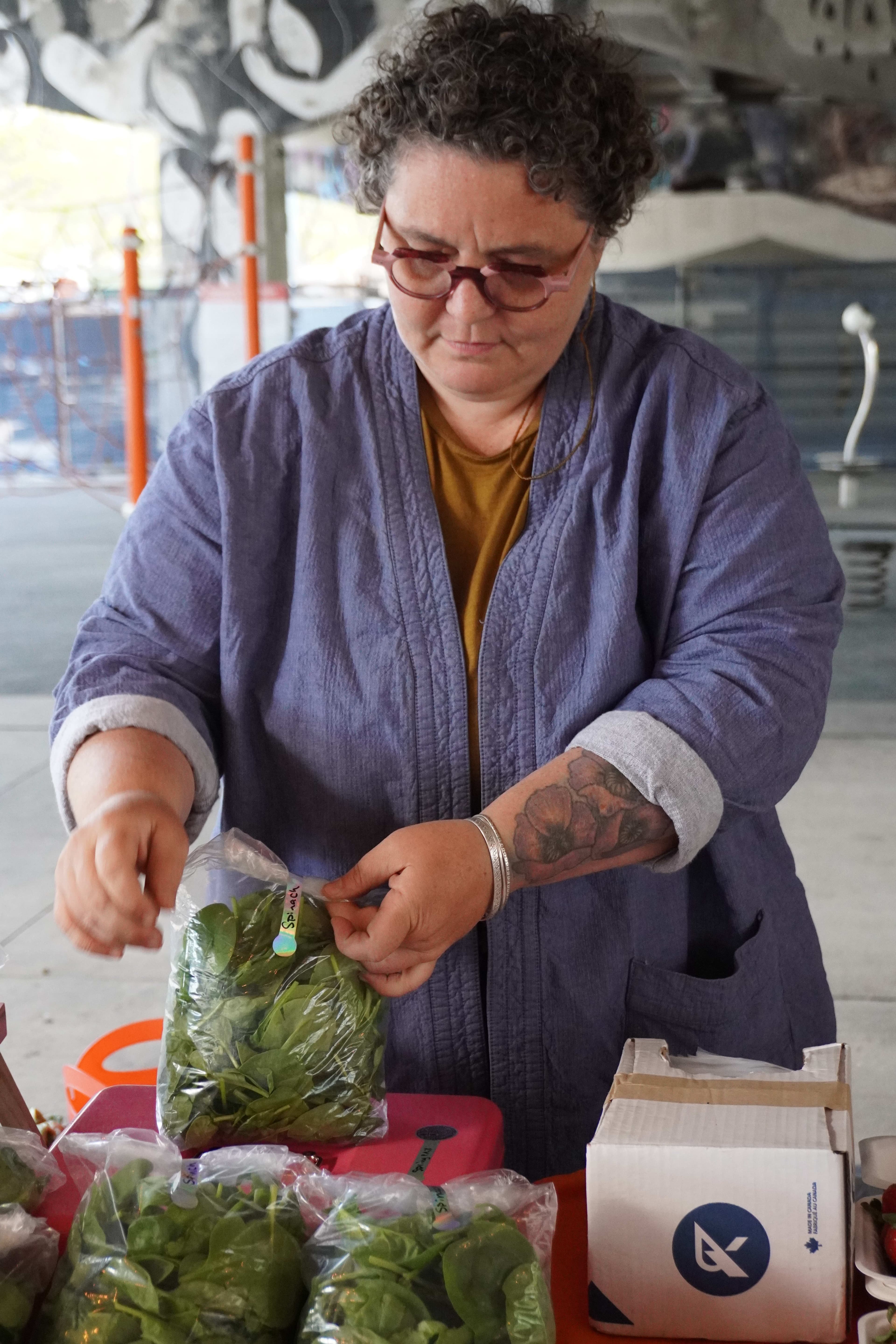
A while back, my partner and I were discussing owning a piece of land in the near future- growing our own produce, maybe even selling some of it. He didn’t disagree. We haven’t bought the land yet. But the conversation stayed with me, the way certain ideas do when they’re still half-formed. What does it actually mean to grow your own food in a city like Toronto? How much land do you even need? Is it practical, or is it just a pleasant thing to imagine on a Sunday? I found a version of the answer in the most Toronto way possible — while doing a story for a local newspaper.
Last month, I covered the reopening of the Underpass Park Farmers Market for The Bridge. While talking to the market team, a name came up: Rogue Farms. And alongside it, a detail that got me thinking — the owner, Alysha, grows her produce not on a large private farm, but in people’s backyards across Toronto, and sells it all at farmers’ markets. I reached out to her the next week. She agreed to meet me at the market, arrived an hour early, and gave me the kind of conversation that makes you rethink something you thought you already understood.
The Underpass Park Farmers Market sits beneath the bridges at the edge of the Don River trail in Corktown — one of those Toronto spots that feels slightly hidden until you know it’s there. Every Thursday from May to October, rain or shine, it fills up with vendors and neighbours and people who show up with a tote bag and no particular hurry.
That’s exactly where I met Alysha.
“I Grew Up Gardening. It Just Stayed with Me.”
She was behind a table stacked with produce — vegetables, fruits, ferns and plants, and there was something immediately warm and unhurried about her.
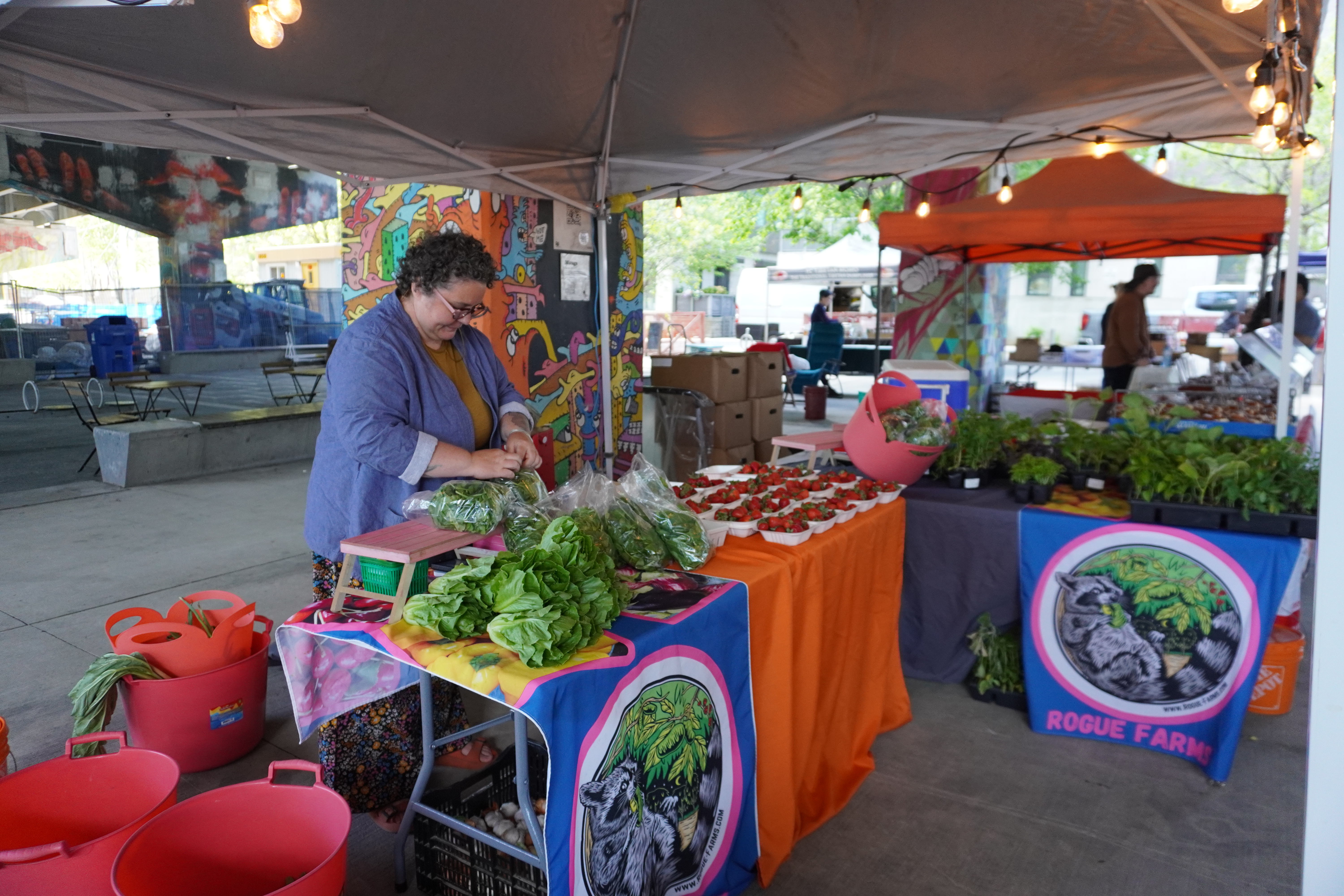
Alysha is the owner of Rogue Farms, a Scarborough-rooted urban farming operation that’s been making its rounds at Toronto farmers’ markets for six years.
Rogue Farms wasn’t Alysha’s business plan or a sustainability manifesto. It was just something she loved. Her mother kept a garden when she was growing up; it was part of the texture of home, something she didn’t think much about as a child. But the feel of it stayed. The soil, the patience of watching something grow, the simple satisfaction of a harvest. That love deepened over time, and then, as tends to happen when something is truly yours, it expanded into something bigger than she’d anticipated.
“I just kept going,” she said. “A little more each year.”
The Big Idea: Your Backyard Is a Farm
And here’s what makes Rogue Farms genuinely worth paying attention to: she is a farmer with just a small piece of land, but sells produce with the range and variety of someone farming acres. How does she make that happen?
Alysha grows her produce in other people’s backyards.
Think about that for a moment.
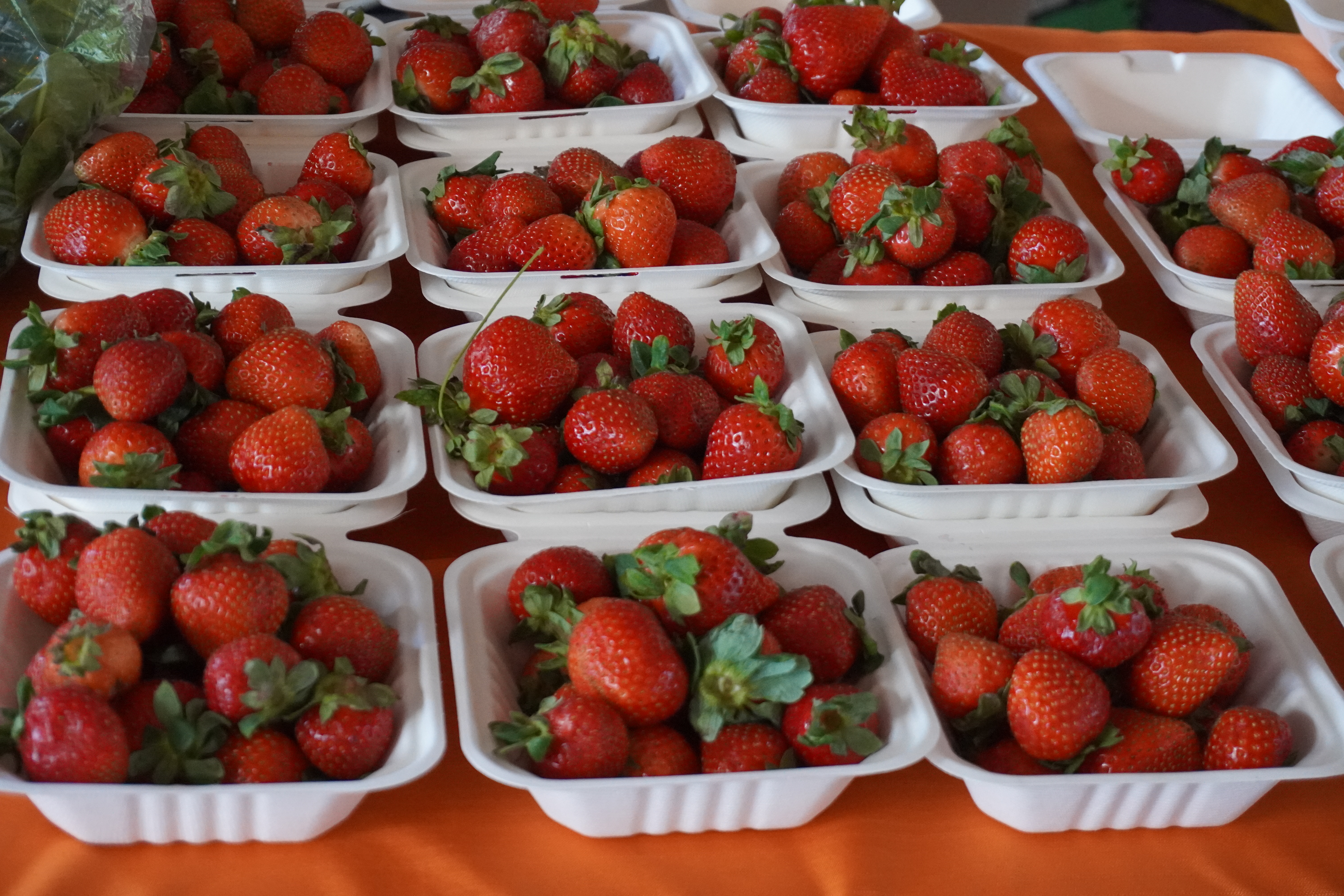
Across Toronto and now into Caledonia, homeowners have opened up their outdoor spaces, and Alysha has turned them into productive, pesticide-free growing patches. She manages everything — the soil, the plants, the compost, the care schedule. The homeowner provides the land. Some are older residents who love the idea of a productive garden but can no longer manage the upkeep themselves. Some are younger people, too busy to tend a backyard that sits unused through the summer. A few of them end up getting involved — helping with seeding, learning farming, turning what began as a space exchange into something closer to a shared project. One of her favourite things is knowing that people across the city have been able to grow tomatoes in their own Toronto backyards, real, sun-ripened ones, because she showed up and made it possible.
It’s a model that sits at the intersection of practicality and philosophy. Urban land is scarce. Good growing land, even more so. But between fences and driveways and patios across the city, there’s more potential soil than most people ever imagine. Alysha sees it — and she has been quietly farming it for years.
And if you’re thinking this is limited to houses with sprawling gardens, it isn’t. She has thought about condos. She has thought about apartments. Wherever there’s a patch of sunlight and a willing host, there’s a conversation worth having.
What She’s Growing (And How She’s Protecting It)
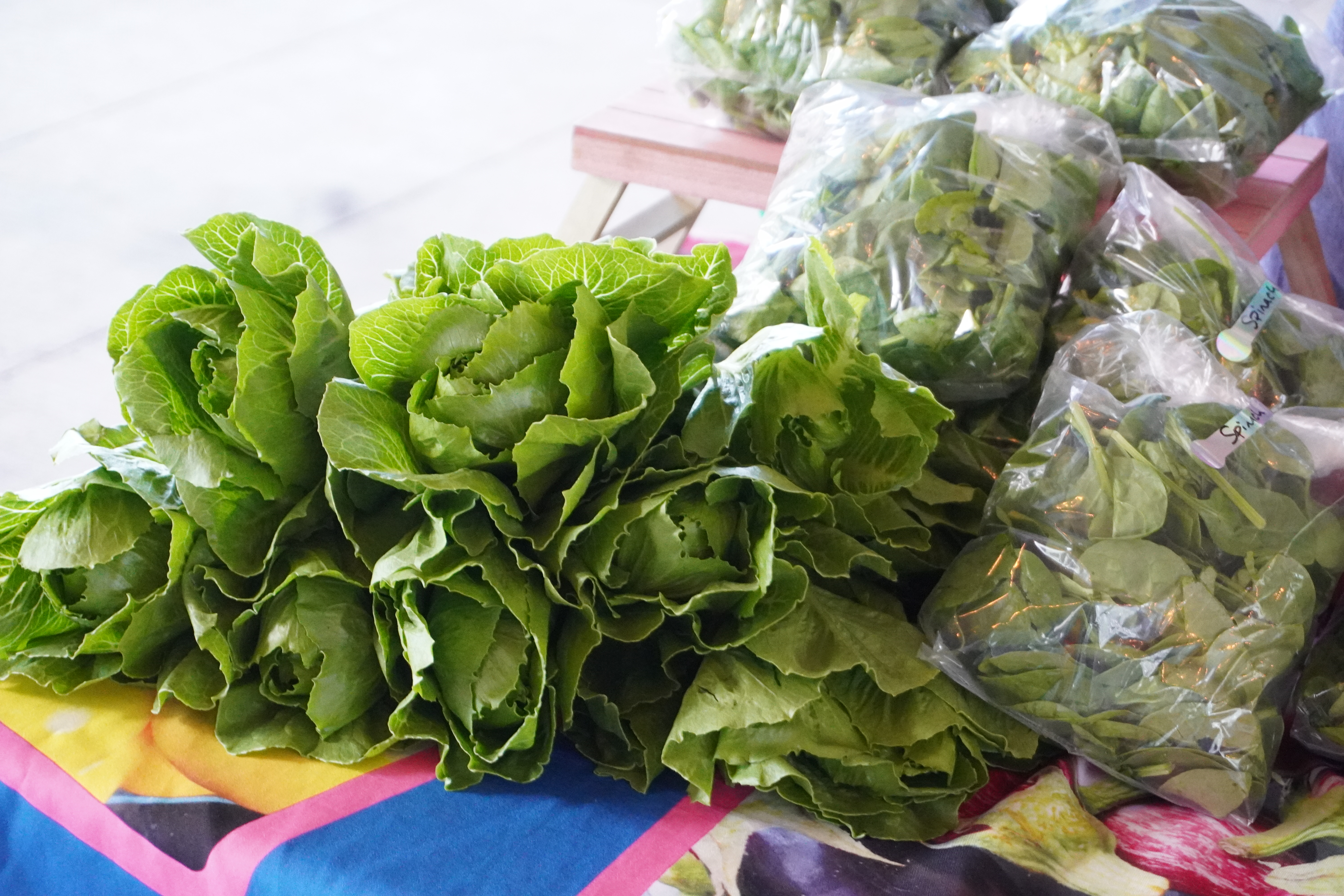
The produce at her market table is the kind of spread that tells you immediately this isn’t someone optimising for profit margin. It’s someone who genuinely loves growing things. Vegetables, fruits, ferns, seasonal variety that shifts week to week.
But what she’s using is just as important as what she grows.
Alysha’s produce is completely pesticide-free. In a world where “chemical-free” often reads as marketing fluff, her approach is specific and considered: she uses neem oil, and nothing else.
Neem oil is derived from the seeds of the Azadirachta indica tree, native to the Indian subcontinent, and it has been used in organic gardening for centuries. It works not by killing insects on contact but by disrupting their feeding, moulting, and reproductive cycles, essentially making your garden inhospitable to pests, without harming beneficial insects like bees and ladybugs. It’s biodegradable, non-toxic to humans and pets, and approved for organic growing. It’s also a natural fungicide, protecting plants from diseases like powdery mildew, and it leaves no dangerous residue in the soil. Once you understand how it works, it’s hard to imagine why anyone would use anything else on a food garden.
Alysha’s approach reflects a careful, principled stewardship of the land she tends.
Making Her Own Compost
Alongside all of this, Alysha makes her own compost. And this needs a special mention.
Good compost is the foundation of healthy soil, and healthy soil is the foundation of healthy food. By composting herself, she’s closing the loop — transforming organic matter back into the nutrients her plants need, without synthetic fertilisers, without degrading the quality of the backyards she works in. She’s not just growing vegetables in these spaces; she’s actively improving them. Season by season, the land she touches gets better.
The Community That Made It Possible
Toronto has quietly built one of the most interesting urban agriculture ecosystems in Canada, and a few organisations are worth knowing if this world interests you.
Toronto Urban Growers, a city-wide organisation supporting and connecting urban farmers since 2009, helped Alysha find some of her growing spaces, a reminder of how much infrastructure exists around this kind of work, if you know to look for it.
Young Urban Farmers runs backyard garden programs and workshops across the city, and BUFCO, the Backyard Urban Farm Company, works with residential clients to build and maintain edible gardens for anyone who wants to grow but doesn’t know where to begin — including on balconies and in containers.
The ecosystem is there. It just doesn’t advertise itself loudly.
The Student of Life!
That’s how one of my close friends once described me — always in the middle of learning something, always treating the people I meet as teachers.
I recognised it immediately in Alysha.
She doesn’t talk like someone who has arrived. She talks like someone who is still very much in the process — curious about what each season will bring, what each new backyard will teach her, what she hasn’t figured out yet.
“I feel like I’m ever learning,” she said. “From life, from people. From every harvest.”
There’s a groundedness to that which I find genuinely rare. Six years of farmers’ markets. Seasons of growing in other people’s backyards. An expansion from Scarborough into Caledonia, with her eye already on balconies and apartment windows. And still, the energy of someone who turns up each week not because she has it all mapped out, but because she’s still finding out what’s possible.
She tends the soil. She adapts to each backyard’s particular light, its drainage, its history. Every homeowner brings a different story. Every season is a new set of variables.
Why This Matters?
We talk a lot, abstractly, about local food and sustainable food and what it would mean to actually know where our produce comes from. I’ve had that conversation myself, standing in a supermarket aisle, reading a label that tells me nothing useful.
Alysha is the answer to that conversation, not in theory, but in practice. She’s out there every Thursday, in all weather, at a market under a highway in Corktown, with soil still in the memory of her hands. She’s not trying to disrupt anything. She’s just growing food, carefully, in the spaces the city forgot it had.
That land conversation my partner and I had? I think about it differently now. You don’t need acres. You need attention, patience, and the willingness to see potential in a quiet backyard.
Find Rogue Farms at the Underpass Park Farmers Market, Thursdays from 4 to 7:30 pm (May through October) at 29 Lower River Street, Toronto. You can also find them on Instagram at @roguefarms.