
I write about maintaining an Indian lifestyle in a foreign land. This piece is a part of my ongoing conversation about food, culture, and what we carry with us. Read more about it here.
I have a clear memory from childhood, I had a best friend who lived near my school, and on the days I missed my school bus and waited for my dad (which usually took an hour), I would go to her place. Her mother would always feed me a warm lunch. No fuss, no prior phone calls, just a plate set down in front of me like it was the most natural thing in the world. Back home, it was no different. My mom cooked elaborate meals for my every birthday, and I mean elaborate, right down to a homemade two-tier cake, for however many friends I invited over. When relatives visited, her first instinct was never to let us order something. She was already in the kitchen. And every time, without fail, the meal was on the table before the doorbell even rang, served warm, and with a kind of love that didn’t need to announce itself.
If there is one thing my culture taught me, it is this: no one leaves the table hungry, and no one should ever be made to feel like a burden. A home-cooked meal, where I come from, is not just food. It is the clearest way a person can say: you matter enough for me to cook for you. Only now, as the years pass, am I realising this love language is quietly fading away.
What Western Culture Told Us About Hosting
There is a version of “modern life” sold to us by Western culture: Hosting means bringing out the best cutlery, coordinated table mats, and a spotless kitchen. Don’t have time for that? Better meet outside in a restaurant. Because aesthetic matters!
The food industry just leaned into this. It sold us the idea that our time is too precious and our kitchens too small to have people over. Delivery apps sold us the idea of convenience over effort. What we quietly lost in that trade was the understanding that no expensive restaurant bill, no matter how generous, can replicate someone cooking for you. That is a different kind of offering entirely.
What Indian Hosting Culture Actually Looks Like
Here is how my culture taught me what hosting means: Invite people over who matter to you and who bring peace. Cook for them with love and warmth and feed them while exchanging stories.
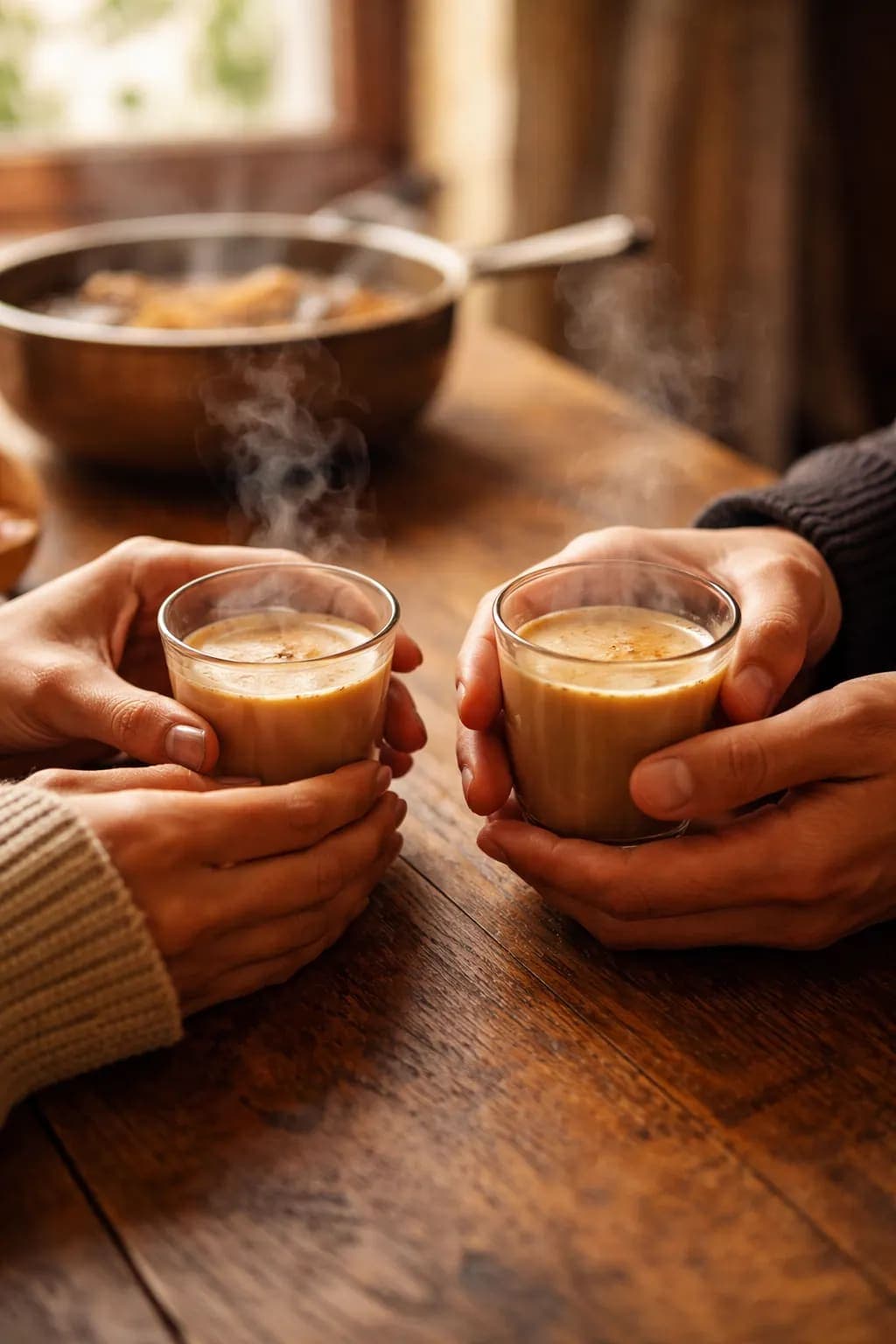
In Indian homes, at least the ones I know, hosting was never a project. It was a reflex. A neighbour drops by unannounced, and within ten minutes, there is chai on the table and something warming in the pan. A friend visits from out of town, and the question is never “where should we go?” It is “what do you feel like eating?” and then it gets made.
It is people coming together: setting the table, helping each other serve, exchanging stories between bites. No one judges the size of your kitchen or the choice of your cutlery. Inviting someone over is as simple as picking up the phone and cooking a meal with whatever you have. That is it. That has always been it.
What was quietly communicated, every single time, was acceptance. Not the performative kind. The kind that says your presence in this home is not an inconvenience. It is the whole point.
I Inherited This Without Knowing. And I Won’t Do It Any Other Way!
I watched my mother do this my entire life, and I did not realise I was being taught something until I found myself doing it too. When someone I care about visits, I cook. Not because I have to. Because I don’t know another way to say I’m glad you’re here that feels as honest. A meal I made takes something from me: my time, my attention, my hands. I am giving it to you willingly. That is not a small thing.
I have kept this practice going in Canada, far from the home I grew up in, and I would not trade it for anything.
But Not Everyone Is Invited (An Honest Confession)
I always wrote with the utmost honesty, and here is the thing: not everyone in my life deserves to be in my home.
Meeting outside? That is reserved. Reserved for people I like but who carry a chaos I am not prepared to absorb. Reserved for situationships that haven’t been properly defined yet. Reserved for the relatives I like in theory, but who don’t deserve to know me beyond my public version. You know the ones.
A restaurant, for me, is a boundary. A beautiful, well-lit, someone-else-cleans-up-after-us boundary. And sometimes that is exactly the relationship you are in, and there is no shame in that whatsoever.
So when I cook for you and invite you to my table, understand that it is not “nothing”. It is actually everything I know how to give.
And if I got you thinking, here is a request: Start again. Invite someone over. Make something with your hands. Let them eat at your table.