
This Blog is 8th in the 10-blog series of Why I Refuse to Westernise My Indian Home in Canada.
We have heard one or the other story about the long, harsh Toronto winters. The routine becomes quiet, grey skies become the norm, and all weekdays and weekends start to feel the same. All this for straight 4 months!
Coming from India, winters used to mean something different. Winter lasted almost the same number of months, except it was less harsh and was full of festive vibes. Each month had something to do with fasting, setting up string lights, decorating the home, making elaborate meals, and keeping a plate of something sweet on hand at all times.
And me being the person I am, decided to deal with Canadian winters the same way. Did it help? Partially, yes! It made my surroundings more vibrant and less depressing. And in the process, I learnt a thing- the Indian calendar was never about religion but was about nature’s rhythm and giving the year a spine.
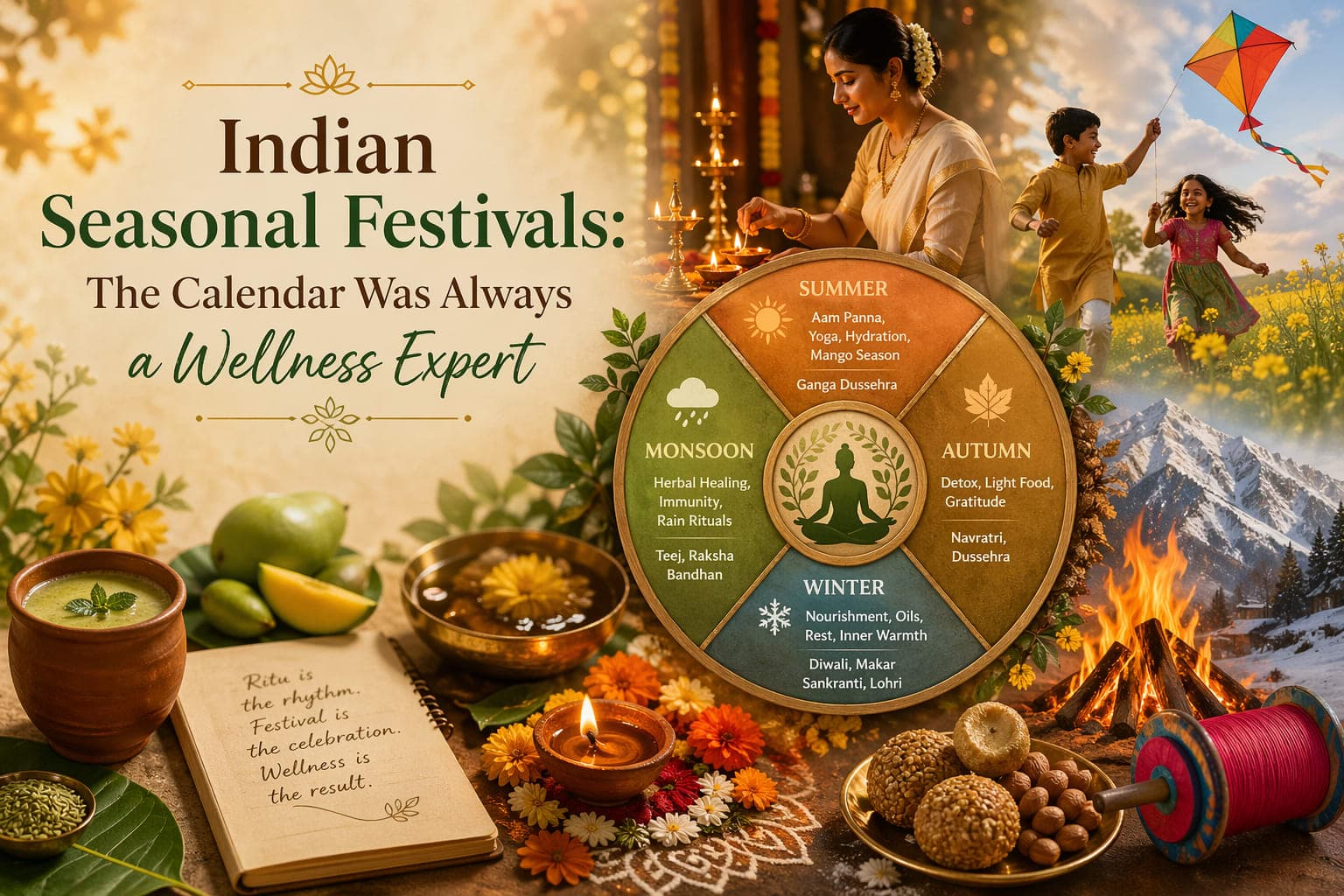
Indian Festivals Are Seasonal Medicines
Indian festivals are much more than just "loud". Yes, fireworks, street processions and crowded pandals are part of it. But none of them defines an Indian festival, and even when you remove all of them, what remains is, remarkably, a practical ritual.
Makar Sankranti arrives in mid-January, right when the sun begins its northward journey after the winter solstice. It is no coincidence that the festival's food, til (sesame) and gur (jaggery), is exactly what Ayurveda recommends for that time of year. Both generate heat in the body. Both support digestion in the cold.
Basant Panchami, celebrated in late January or February, is dedicated to Saraswati and the arrival of spring. The prescribed colour is yellow, the colour of mustard flowers just beginning to bloom across North Indian fields. Whether or not mustard grows where you live, wearing yellow in the grey heart of a Canadian February does something to your mood that is difficult to explain.
Holi follows in March. The bonfires of Holika Dahan, the night before the actual Holi day, traditionally fuelled by the dry wood and leaves of winter, are a literal burning away of what the cold season left behind. The riot of colour the next morning is spring made physical.
Navratri comes twice a year, once in the spring (Chaitra) and once in autumn (Sharada), marking the two major seasonal transitions. Both involve fasting, both involve nine nights of prayer, and both happen to fall during the periods when, according to traditional knowledge, the digestive system benefits most from a lighter load. Autumn Navratri, in particular, arrives just as the heat of summer ends and the body needs to reset before winter.
Diwali, in October or November, is the festival of lights placed precisely in the darkest stretch before the longest nights. Every culture on earth has some version of light-in-darkness at this time of year. India's version is just more elaborate, more fragrant, and comes with better food.
The calendar, it turns out, was always a wellness plan wearing festival clothes.
Why These Festivals Matter More In Canada
In India, the season does most of the work for you. The mango flowers in Vasant let you know it is Basant Panchami. The humidity breaks and the air changes just before Navratri. The smell of dhoop from the neighbours tells you Diwali is three days away.
In Canada, the sensory cues are different. The seasons shift, but they do not announce themselves in the same language. So the festival becomes the cue instead of the other way around. Indian festivals do not need public space to do their work. It only needs intention.
There is a line I return to often when I think about why I maintain these practices so far from where I learned them: the idea that home is not a geography, it is a set of habits performed with intention.
The Indian seasonal calendar gave me those habits. And in a city that is always asking me to become someone slightly different from who I was, those habits are the most honest answer I have.