
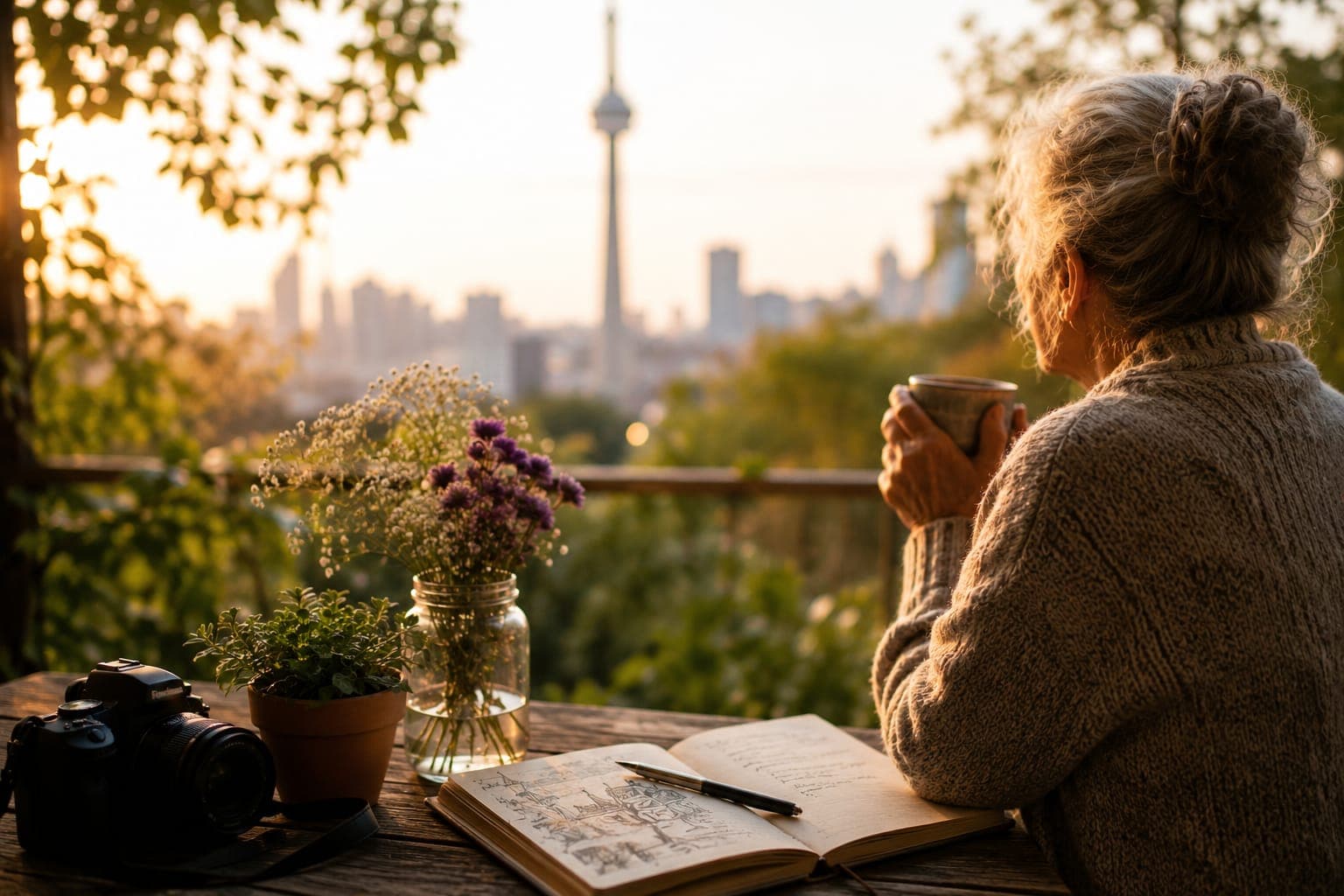
Toronto summers are finally showing up. I'm still waiting for proper summer sunshine, but that never stops the city from coming alive again. Events slowly return, parks begin to fill up, and people seem a little lighter after months of grey skies.
And if you've been reading my writing for a while, you probably know how much I love being outside, travelling, volunteering, and being part of the communities that make these events happen. There's a quiet sense of pride in knowing I'm giving back to the city in the small ways I can.
So, this happened during one of my volunteer orientation sessions.
I was sitting next to a retired woman while everyone around us was busy scrolling through their phones. I was on Twitter too for a while, but I eventually kept my phone aside because filling silence with the noise of social media has never really felt like me. A few minutes later, the woman sitting next to me complimented the necklace I was wearing. Honestly, I would have complimented myself too; it was a really cool silver necklace with a moon pendant (Gift Courtesy: My Best Friend!).
What started with that soon turned into a conversation about why we both enjoyed volunteering, our experiences with it, what I do for a living, what her work life had been like, and, of course, how retirement was treating her.
She seemed genuinely happy about that part of her life, but she also admitted there wasn't much for her to do anymore.
So I asked the most obvious question. "Don't you have hobbies to pursue? Now that you have all the time in hand, wouldn't it be easier?"
Her response stayed with me the entire night.
She said, "I like gardening. But with Toronto weather, you barely get six months to enjoy it. And this year, it looks like it will be just five. I wish I had started earlier in life because I really enjoy it now."
And then she said something I don't think I'll forget anytime soon.
"Start your hobbies early in life. Don't wait until retirement to become the person you wanted to be."
She said it so calmly, with a softness in her voice, the kind of softness grandmothers speak with when they're telling you something important without trying to sound preachy.
She told me people imagine retirement as this endless pocket of free time where they will finally paint, travel, garden, write, dance, learn music, or pick up photography. But by then, life has already shaped the body and mind in ways we underestimate. Sometimes the energy is lower. Sometimes health becomes unpredictable. Sometimes the mental bandwidth simply isn't there anymore after decades of running in survival mode.
And strangely, I didn't find sadness in what she said. I found realism. Because aren't most of us doing this? We postpone joy. We treat hobbies as rewards for productivity instead of treating them as part of being human.
More often than not, whenever I tell someone I want to go out and photograph the world or leave everything behind to write a meaningful book, the responses usually sound something like this:
"Don't leave a well-paying job for a hobby."
"Family comes with responsibilities. You can't leave everything aside."
"Do it once you've earned enough money or after retirement."
As if life eventually arrives at a calmer version of itself, where we suddenly become free.
And somewhere along the way, we forget that hobbies are not interruptions to life. They are life.
For years, society has quietly trained us to prioritise output over curiosity. Productivity over play. Careers over creativity. We celebrate burnout like ambition and wear busyness like a badge of honour. In that kind of world, hobbies slowly begin to feel optional, sometimes even childish.
Yet psychologists and researchers have repeatedly found the opposite.
Studies around leisure activities and creative engagement have shown that hobbies improve emotional resilience, reduce stress, strengthen cognitive function, and even contribute to healthier ageing. People who consistently engage in activities they enjoy often report a stronger sense of identity outside work and a deeper feeling of fulfilment in daily life.
And honestly, it makes sense.
I've experienced it myself.
Hobbies are one of the very few things in my adulthood that I do without the pressure of monetising them or impressing someone else. I do them entirely for myself.
I'm allowed to be bad at them.
I'm allowed to learn slowly.
I'm allowed to enjoy something simply because it makes me happy.
And that happiness matters more than we admit.
I think many people assume hobbies require huge chunks of time- long weekends, expensive equipment, perfect routines. But most meaningful things in life are built quietly into everyday moments.
Here's how I pursue some of mine.
- I love photography, but I don't carry my DSLR everywhere. Most days, I simply use my phone camera and take photographs during grocery runs or evening walks. It becomes less about the camera and more about noticing the subject.
- I love reading, so I carry a book in my bag almost everywhere I go-sometimes a physical copy, sometimes a digital one on my iPad.
- I write random thoughts in a small diary I keep either at my desk or in my bag. Almost anything can spark an idea worth writing about.
- And sometimes, I sketch on napkins just to practise the steadiness of my hand. Last weekend, I ended up sketching an entire subject.
None of these things looks particularly "productive" on paper. But they make me happy. And somehow, they make life feel fuller too.
The retired woman I met wasn't saying retirement is hopeless. I think what she really meant was this: don't build a life where joy is always scheduled for later. Because "later" is unpredictable.
With age, your energy changes. Your responsibilities change. Your body changes. Sometimes, even your confidence changes.
And perhaps one of the hardest truths about adulthood is this- the longer we stay disconnected from the things we once loved, the harder it becomes to return to them.
I kept thinking about this long after that conversation ended. Because right now, I live in a city where everyone seems to be rushing toward the next milestone. The next promotion. The next salary jump. The next version of success. But I often wonder how many of us are still making space for the things that once made us feel alive, instead of postponing them for retirement.
Maybe the purpose of hobbies is not to master a skill or become exceptionally good at something. Maybe it is simply this: despite everything the world demands from us, a part of us still chooses curiosity over efficiency.
And perhaps that quiet curiosity is worth protecting long before retirement arrives.